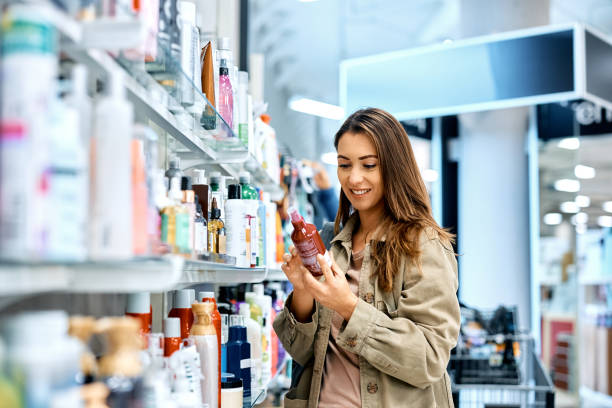
You’re standing in the skincare aisle holding two products. One has “clean” printed across the front in big, confident letters. So that one, right? That’s obviously the safer choice? That’s the real question we’re answering here: is your skincare actually clean, or does the label just say so?
Real talk, I used to think so too. And then I actually looked into what the law requires ‘clean’ to mean before a brand can put it on a label.
It’s nothing. There’s no legal definition. No regulatory body checking a box. No third party verifying anything before that word goes on the packaging. Any company can call any product clean, whether or not there’s a single thing behind it.
That’s not me trying to scare you off the word. It’s why I want to walk you through what’s actually worth checking for, so you’re not left guessing every time you’re standing in an aisle or scrolling through an ad promising you the world in a jar.
What “Clean” Actually Means (And What It Doesn’t)
Here’s the myth I hear the most: clean means all-natural, or preservative-free.
I get why. It sounds intuitive. Fewer ingredients, less processed, must be better for your skin. But it’s actually backwards.
Preservatives exist for a reason. Without them, the product sitting in your steamy bathroom becomes a place for bacteria and mold to grow, sometimes within a matter of weeks. In fact, a product with no preservatives isn’t cleaner. It’s just riskier, and you’re the one who finds that out the hard way.
Real clean means something more specific than a short ingredient list or a green leaf on the packaging. “It means safe. It also means tested, thoroughly and repeatedly, not just once before launch. And it means a company that can actually show you their process instead of asking you to take their word for it. That gap, between what a label claims and what’s actually true, is exactly why the question is your skincare actually clean matters more than the word “clean” itself.
Compare that to something like sunscreen. The FDA actually regulates SPF claims, testing them against a real standard before a brand can put a number on the bottle. That’s part of why how to apply SPF correctly actually matters, the number means something. “Clean” doesn’t have that same backbone behind it, at least not yet.
Is Your Skincare Actually Clean? Here Are 5 Signs to Check
So if “natural” and “preservative-free” aren’t the markers, what should you actually be looking for? Here are five real signs worth checking.
1. The brand can tell you how often they test, and for what. Not “we test our products.” How often, and specifically for what. Safety, irritancy, allergy response. A brand that’s genuinely doing this work will have real numbers, not vague reassurance.
2. There’s dermatologist and allergy testing, not just a claim of it. Brands slap ‘dermatologist tested’ on a lot of bottles. What you want to know is whether that testing happens consistently, on every product, not as a one-time marketing move for a single hero item.
3. The brand discloses fragrance and common irritants clearly. Fragrance is one of the most common triggers for skin reactions, and a lot of products bury it under vague terms like “parfum.” A brand that’s serious about being clean will be upfront about what’s actually in there and why.
4. An independent third party has actually looked at it. In fact, this is a big one. Certifications like the Good Housekeeping Seal mean an outside organization evaluated the product, not just the brand’s own marketing team. That’s a meaningfully different level of accountability.
5. The safety claims come with actual data, not just buzzwords. “Natural,” “gentle,” and “clean” are words. Numbers, studies, and testing standards are proof. If a brand can only offer you the words, that should tell you something.
Is Your Skincare Actually Clean? Run It Through This Checklist
Next time you’re deciding whether something in your routine (or your cart) is actually clean, run it through this:
- Can I find out how this was tested, and for what?
- Is there real dermatologist or allergy testing behind it, not just a label claim?
- Are the ingredients that commonly cause irritation, like fragrance, clearly disclosed?
- Has anyone outside the company evaluated this product?
- Does the brand back up their claims with something more than a feel-good word?
If you can answer yes to most of these, you’re likely in good shape. If you’re not sure, or if you’re realizing you’ve never actually checked, that’s incredibly common, because nobody ever taught us to look past the front of the label.
For an outside, credible perspective on cosmetic ingredient safety and how the U.S. actually regulates products, the FDA’s guide to using cosmetics safely is a genuinely useful place to start.
When You’re Not Sure, Don’t Guess
Here’s what I’ve learned after years of doing this work: most women don’t need a complete overhaul. Instead, they need someone to actually look at what they’re using and tell them the truth about it, plus or minus.
That’s exactly the kind of thing I love sitting down with someone for. Not to sell you something you don’t need, just to actually look together at what’s in your routine and figure out what’s working, what’s not, and where the gaps are.
If you’ve read all of this and you’re realizing you genuinely don’t know what’s in your bathroom cabinet right now, that’s okay. That’s incredibly normal. If you’re still asking yourself is your skincare actually clean after reading all this, that’s exactly the conversation worth having. If you want a second set of eyes on it, book a session with me, and we’ll go through it together, no pressure, no judgment.